
TL;DR: Quick Tips for Storing Clothes
If you are short on time, here are the essential rules for storing your wardrobe:
- Clean everything first: Wash and thoroughly dry every garment to prevent odors and stains from setting.
- Choose the right containers: Use airtight plastic storage bins for folded items and sturdy wardrobe boxes with metal hanging bars for delicate garments.
- Avoid vacuum-sealed bags long-term: Vacuum packing can damage natural fibers and create permanent creases.
- Elevate and organize: Stack plastic bins on pallets to keep them off the floor, and keep seasonal items near the front of the unit for easy retrieval.
- Mitigate environmental elements: Use climate-controlled units to reduce extreme temperature shifts and humidity.
Ready to clear out some closet space? Find a Store Space Location Near You and view local rates today.
Table of Contents
- How Should I Prepare My Clothes Before Packing?
- What Are the Best Containers for Storing Clothes?
- Which Clothes Should Be Folded vs. Hung?
- How Can I Mitigate Damage from Pests and Moisture?
- What Size Storage Unit Do I Need for Clothing?
- How Do I Organize My Storage Unit for Easy Access?
- Understanding Climate-Controlled Storage
- Frequently Asked Questions
Do you need to clear out seasonal wardrobes or free up some extra space in your closets? Storing clothes in a rental storage unit is an incredibly common and effective solution, but doing it improperly can lead to creased, musty, or damaged garments.
To help keep your wardrobe in great shape, we have compiled the ultimate insider’s guide to preparing, packing, and organizing your garments. By following a few simple steps, you can help protect your clothing from dust and environmental wear while keeping your home clutter-free.
How Should I Prepare My Clothes Before Packing?
Before packing a single item into a box, it is vital to thoroughly wash and completely dry your entire wardrobe. Even if an item looks clean, invisible traces of body oils, perfume, deodorant, and perspiration can darken over time, leaving permanent yellow stains that are nearly impossible to remove.
Additionally, leftover moisture is the primary cause of mold and mildew growth. According to textile preservation studies by the Smithsonian Institution Museum Conservation Institute, storing textiles with residual organic matter or dampness greatly accelerates fiber rot and attracts common fabric pests. Make sure your laundry cycle is complete and items are 100% dry to the touch before packing.
What Are the Best Containers for Storing Clothes?
The containers you select play a critical role in preserving your garments during their time in a rental unit.
Airtight Plastic Storage Bins
For the majority of your casual wardrobe—such as t-shirts, jeans, sweaters, and synthetic athletic wear—airtight plastic storage bins are highly recommended. These durable plastic totes protect against moisture, dust, and insects. Because they are clear, they also allow you to easily identify what is stored inside without having to open them.
Wardrobe Boxes
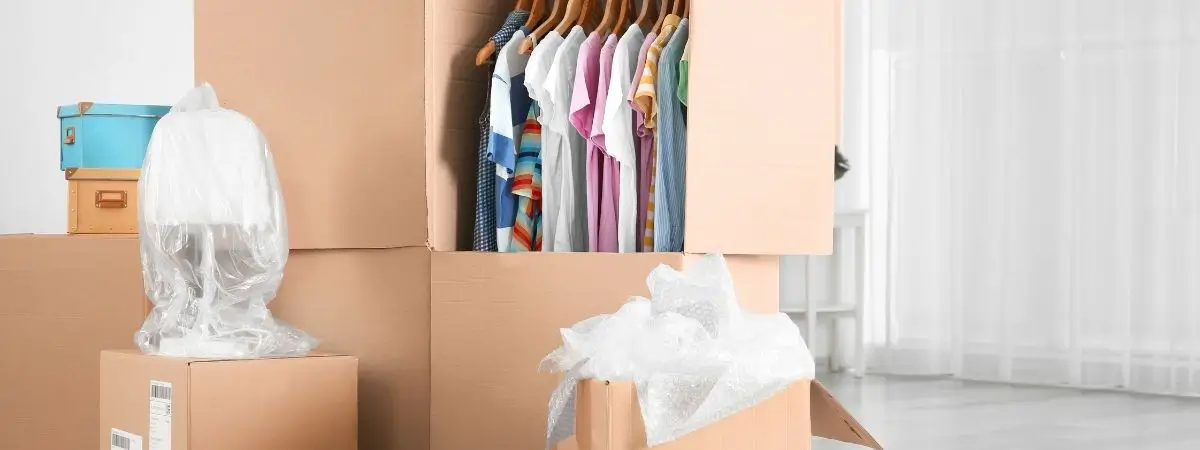
For formal wear, suits, dresses, and delicate items, cardboard wardrobe boxes are the perfect solution. A wardrobe box is a heavy-duty cardboard container featuring a built-in metal hanging bar across the top. This design allows you to transfer clothes directly from your closet hanger onto the bar, preventing severe creasing and structural damage.
The Limitations of Vacuum Bags and Cardboard
While vacuum-sealed bags are excellent space-savers for synthetic blankets or sleeping bags, they are not recommended for natural fibers like wool, silk, or down feather coats. Starving these fabrics of air compresses the delicate fibers, which can ruin the garment’s drape and cause permanent creasing.
Similarly, standard cardboard boxes should only be utilized for short-term storage (under three months). Cardboard is susceptible to humidity fluctuations and is easily breached by persistent insects or rodents looking for nesting material.
Which Clothes Should Be Folded vs. Hung?
How you pack your clothes depends heavily on the fabric and weight of each garment.
- What to Hang: Delicate and easily wrinkled fabrics like silk, linen, and lace should always be hung. Suits, blazers, formal dresses, and crisp button-down shirts are best preserved in wardrobe boxes. For extra protection, slip these items into cotton garment bags before hanging them. Avoid plastic dry-cleaning bags, as they trap ambient moisture and chemical residues against the fabric.
- What to Fold: Heavy garments, such as chunky wool sweaters or heavily beaded gowns, should always be folded rather than hung. Hanging heavy items for long periods can stretch out the shoulders and permanently warp the silhouette of the garment. Casual cotton wear, denim, synthetic activewear, undergarments, and socks should be folded neatly to maximize storage container space.
How Can I Mitigate Damage from Pests and Moisture?
To keep your stored wardrobe smelling fresh and to discourage pests, you can take a few simple, proactive steps:
- Use Silica Gel Desiccant Packets: Placing a few silica packets inside your airtight plastic storage bins will absorb any residual moisture trapped during the sealing process.
- Add Lavender or Cedar: Instead of using chemical-heavy mothballs—which leave a strong, persistent odor that is very difficult to wash out—opt for natural alternatives. Cedar chips, cedar blocks, or dried lavender sachets naturally repel pests and leave a pleasant, clean scent.
- Incorporate Dryer Sheets: Tucking a fresh dryer sheet into the bottom of your plastic bins is an easy trick to keep your clothes smelling freshly laundered.
For more helpful guides on organizing and protecting your belongings, browse our comprehensive Store Space Moving Tips and Advice Hub.
What Size Storage Unit Do I Need for Clothing?
- 5×5 Storage Unit: This option is roughly the size of a standard hall closet. It is perfect for storing a few seasonal wardrobe boxes, several plastic bins, and shoe organizers.
- 5×10 Storage Unit: Comparable to a walk-in closet, this size can comfortably accommodate dozens of clothing bins, multiple wardrobe boxes, and small items of furniture like a chest of drawers.
- 10×10 Storage Unit: Approximating the size of a standard bedroom, this unit size is ideal if you are storing an entire family’s seasonal wardrobe alongside furniture and mattresses.
- 10×20 Storage Unit: Roughly the size of a one-car garage, this space is typically reserved for entire household moves, including major appliances, furniture, and extensive wardrobe collections.
Unsure which size is right for you? Take a look at our interactive Store Space Self-Storage Size Guide to find your perfect match.
How Do I Organize My Storage Unit for Easy Access?
Once you arrive at your rental unit, proper arrangement is key to making sure you can easily find your clothes when the seasons change:
- Elevate Your Bins: Lay down wooden pallets, plastic sheeting, or a clean tarp on the concrete floor before stacking your containers. This acts as a barrier against rising ground moisture.
- Heaviest Bins on the Bottom: Always stack heavier plastic containers at the bottom of your stacks, placing lighter boxes and delicate cardboard wardrobe boxes on top to prevent crushing.
- Create a Walkway: Avoid packing the space solid from front to back. Leave a narrow aisle down the center of your unit so you can easily reach containers stored in the back.
- Keep Seasonal Items Front and Center: Place the clothes you expect to retrieve first—such as winter coats or summer swimwear—closest to the unit door.
- Label Everything clearly: Use a dark marker and packing tape to label multiple sides of every container with its general contents (e.g., “Winter Sweaters” or “Kids’ Summer Clothes”).
Understanding Climate-Controlled Storage
If you are planning to store delicate fabrics, leather, or fur, you may want to consider renting a climate-controlled storage unit.
Please note that climate-controlled storage is not a guarantee of safety or complete preservation; rather, it is designed to mitigate damage caused by extreme environmental factors. These specialized units regulate indoor temperatures to stay consistently between 55°F and 80°F year-round, while also moderating humidity fluctuations. This environmental mitigation helps prevent synthetic fibers from melting, leather from cracking, and damp conditions that foster mold and mildew.
Frequently Asked Questions
Q: Can I store clothes in cardboard boxes?
A: Yes, cardboard boxes are perfectly fine for short-term storage of up to three months. However, for long-term storage or storage in humid conditions, airtight plastic storage bins are much better suited to shield your garments from dust, moisture, and pests.
Q: Should I use mothballs to protect my clothes?
A: While mothballs are effective at keeping pests away, they contain chemicals that leave behind a very strong, stubborn odor. Natural cedar chips, cedar blocks, or dried lavender sachets are excellent, pleasant-smelling alternatives that naturally repel fabric-damaging insects.
Q: Is it safe to store valuable clothing in a storage unit?
A: Store Space offers rental spaces solely for storage purposes, and we do not guarantee or imply that valuables should be stored. Renters are responsible for securing their own insurance for any items placed in their rented units. It is always recommended to evaluate the personal or financial value of your belongings and ensure they are appropriately insured.
Q: How does climate-controlled storage help my clothes?
A: Climate-controlled storage does not guarantee safety or absolute protection. Instead, it merely mitigates damage caused by environmental factors, such as temperature extremes or humidity fluctuations, by keeping the indoor temperature regulated between 55°F and 80°F. This regulation helps reduce the risk of mold growth, fabric degradation, and warping.